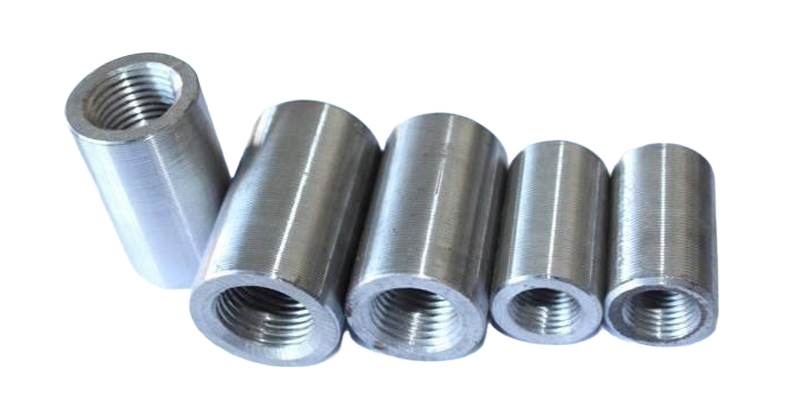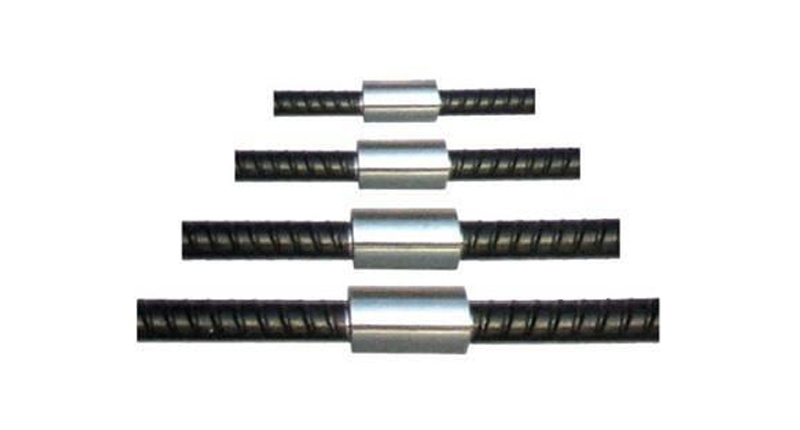

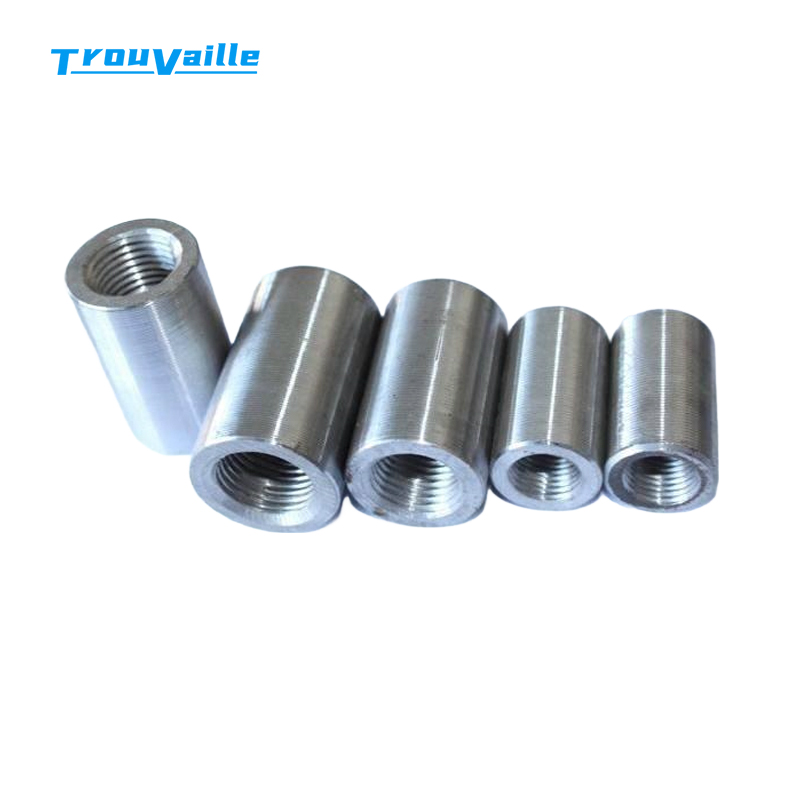
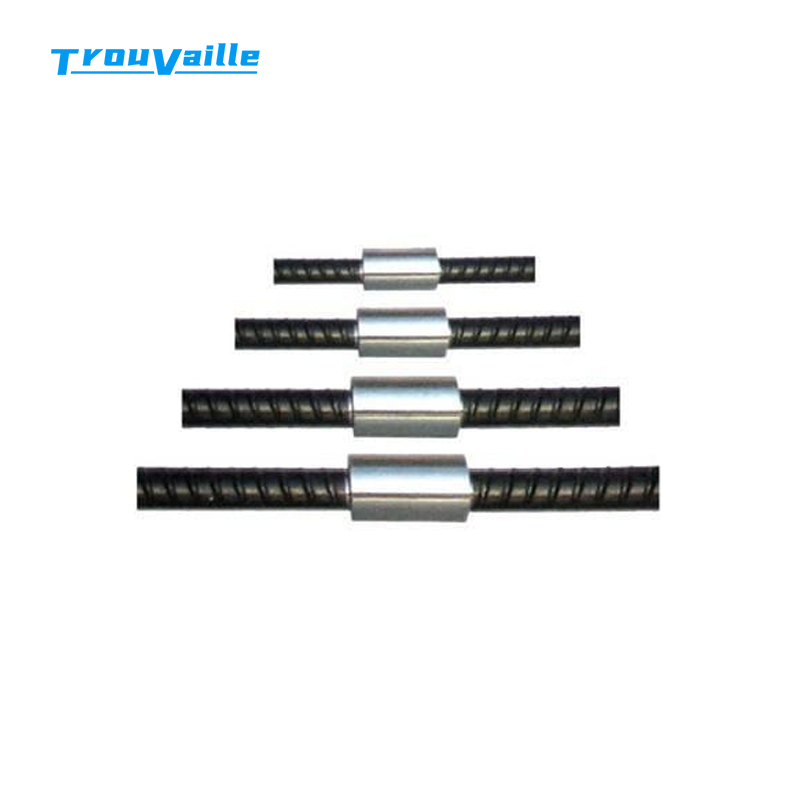
In high‑rise buildings, sea‑crossing bridges, nuclear power plants, and large‑span stadiums, the rebar threaded joint serves as the critical connector for achieving efficient, reliable splicing of reinforcing bars.
Made from high‑quality carbon or low‑alloy steel with precision rolling or tapping, these joints achieve thread accuracy of Class 6H and, when paired with rolled‑thread rebar ends, deliver equal‑strength connections,tensile strength matching or exceeding the parent rebar, with excellent fatigue resistance and seismic ductility.
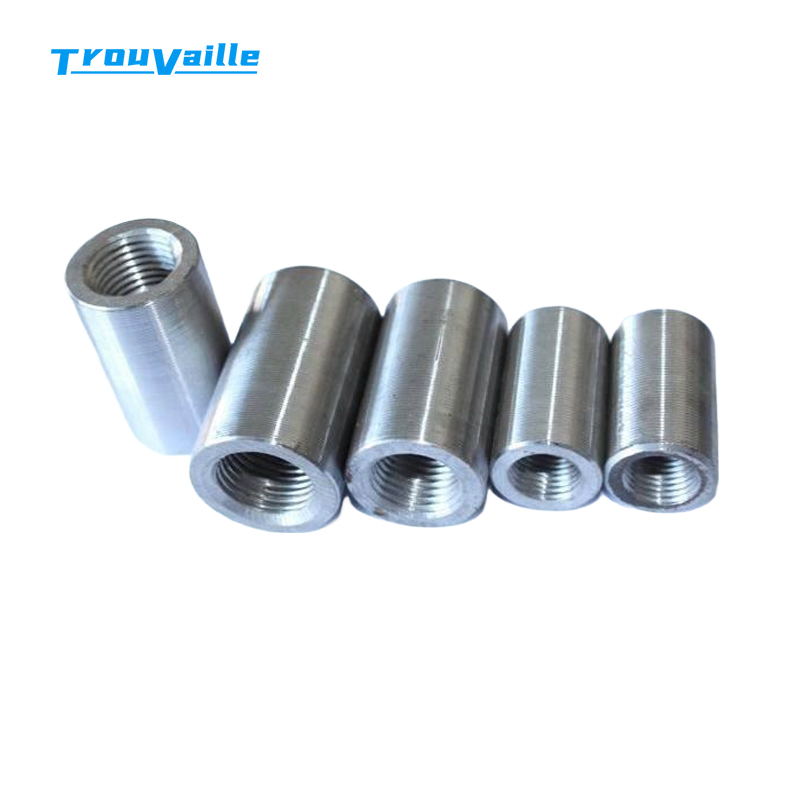
Key advantages: welding‑free installation eliminates open‑flame hazards, significantly enhancing safety in tunnels and confined spaces; torque‑controlled tightening ensures consistent clamping force, and inspection is straightforward; anti‑corrosion treatment on inner and outer walls suits humid environments.
Applications span precast concrete construction, bridge piers, subway segments, and wind‑tower foundations—all demanding high‑integrity splicing.
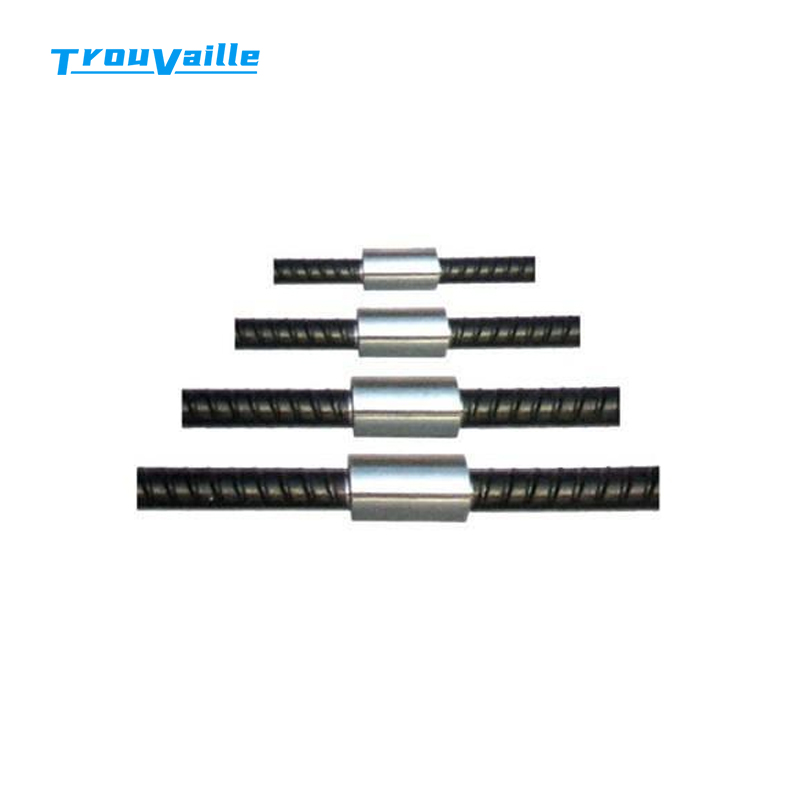
Just as a durable Chipper blade keeps a chipper running reliably, a precision‑machined rebar joint ensures the rebar cage acts as a unified load‑bearing system; routine torque verification, much like replacing a worn Chipper blade, is a standard quality‑assurance practice; and selecting premium threaded joints,akin to equipping with a sharp Chipper blade,effectively prevents connection failure, laying a solid structural foundation for century‑spanning projects.